Why didn't retirement solve his anxiety?

Client details, quotes, and assessment results in this article are shared with explicit consent. Identifying information has been omitted or altered where needed to protect privacy.
Recently I worked with a client who had already reached what many founders are working toward.
He had reached financial independence in his forties. He hadn't worked for almost a year. His investments were enough to support both himself and his wife, and he was spending his time on passion projects.
By most people's definition, he had "made it." So why was he waking up with panic attacks?
Why did he still feel exhausted almost every afternoon?
Why was his mind constantly scanning for the next financial catastrophe?
If money creates safety, this shouldn't have been happening. But that's exactly what made this case so interesting.
It also challenged one of the most common assumptions I hear from founders.
The mistake many high achievers make
Many entrepreneurs believe that once they reach a certain financial milestone, they will finally relax.
"I'll feel safe once I have enough."
Enough savings.
Enough investments.
Enough passive income.
Enough certainty.
Sometimes that happens. But not always.
Your bank account can change much faster than your nervous system does.
Research on retirement reflects this. Financial security alone doesn't reliably predict well-being. Many people who are objectively comfortable still struggle with anxiety, identity shifts, or a lingering sense of uncertainty.
That's exactly what I saw. When he came to me, he believed he was burned out.
After our first session, something didn't fit. His life looked objectively safe, but his body clearly disagreed.
That's why every client I work with starts with an assessment. The assessment showed moderate anxiety and moderate stress.
But numbers are just numbers.
What interested me more was the pattern.
His sleep wasn't restorative. His nervous system never really seemed to switch off.
His body was acting as if it still needed to stay alert, even though his life had changed.
Building the foundation
So for the first four weeks, we didn't focus on trauma.
We focused on creating stability. The way I think about recovery is a bit like renovating a house.
First, you stabilize the foundation.
Then you repair the structure.
Finally, you redesign the rooms.
The magic wasn't in doing something extraordinary. It was in doing the right things, in the right order, for his nervous system.
We spent four weeks strengthening the foundation - sleep, daily rhythms, movement, nutrition, and nervous system regulation.
Four weeks later, we repeated the assessment. But that wasn't the most interesting part.
His anxiety score had gone from 13 to 6.
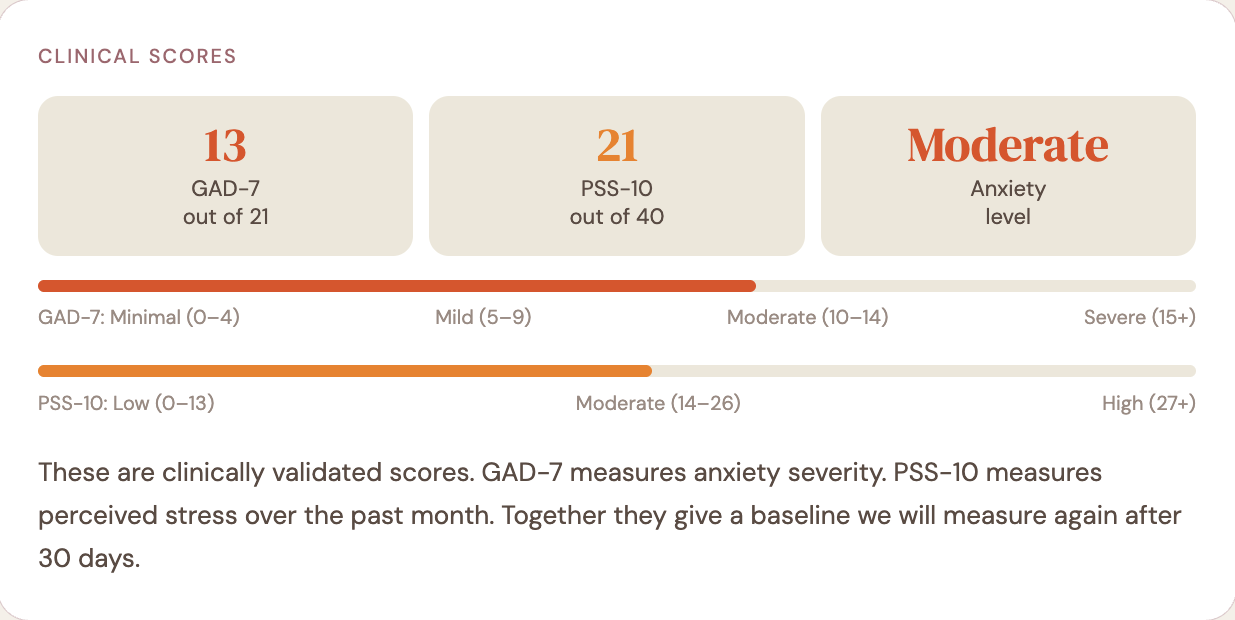
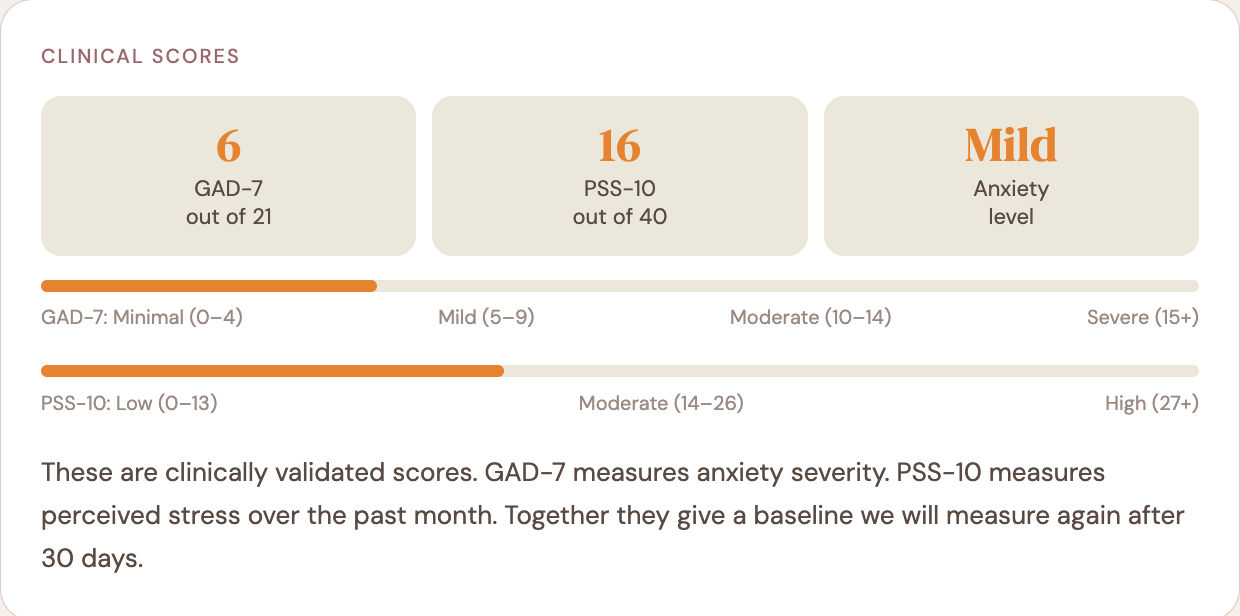
That's a 54% reduction.
His energy was better. He felt calmer.
Then we looked at his stress score. His stress score had improved only slightly and was still in the moderate range.
That was the clue we needed.
The foundation was much stronger. But the house was still standing on old blueprints.
The deeper beliefs that taught his brain that uncertainty equals danger were still there.
That's where psychological work - such as EMDR - can become invaluable. In this case, though, we hadn't done any EMDR yet.
That was intentional.
One of the principles I follow is that we don't rush into trauma processing just because someone is struggling. We work at the pace of the nervous system.
Before asking someone to revisit difficult experiences, I want to make sure they have enough stability and capacity to stay present with them.
In his case, that meant spending the first four weeks building a stronger foundation. Only then could we decide together whether deeper psychological work was needed.
This is something I see quite often. People think that once life becomes objectively safer, their body will automatically feel safe too.
Sometimes it does. Sometimes it doesn't.
Sometimes your circumstances change much faster than your nervous system does.
That's where psychological work becomes important. Body-based work helps create enough stability and capacity.
Then deeper work, like EMDR, can help update the patterns that are still keeping the nervous system on alert.
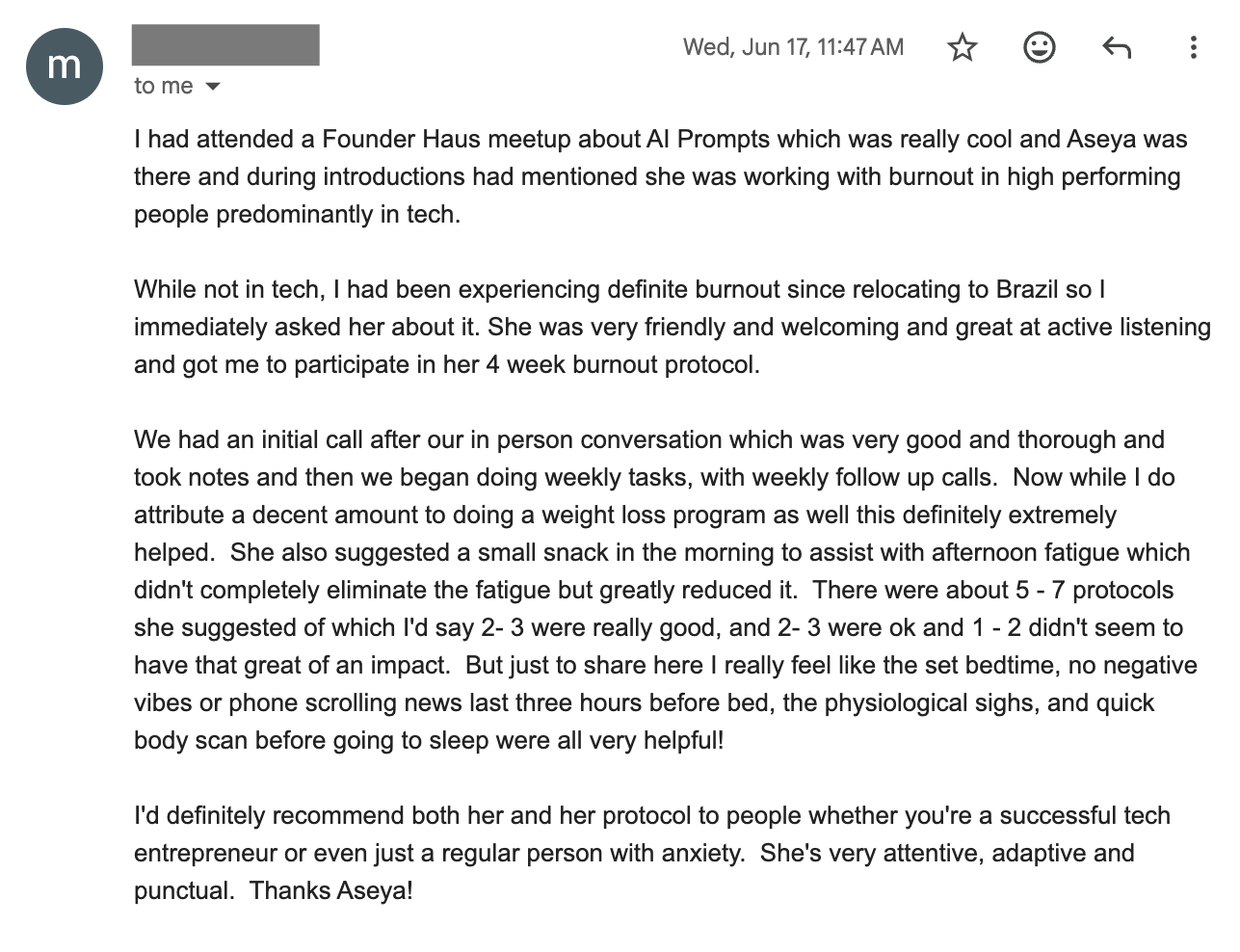
Lasting change rarely comes from choosing between the body and the mind. It comes from helping them work together.
The invitation
The next chapter doesn't need a strategy yet. It needs a nervous system that can live in it.
If something in you kept saying this is me — that's the signal worth listening to.